The difference of direct flame
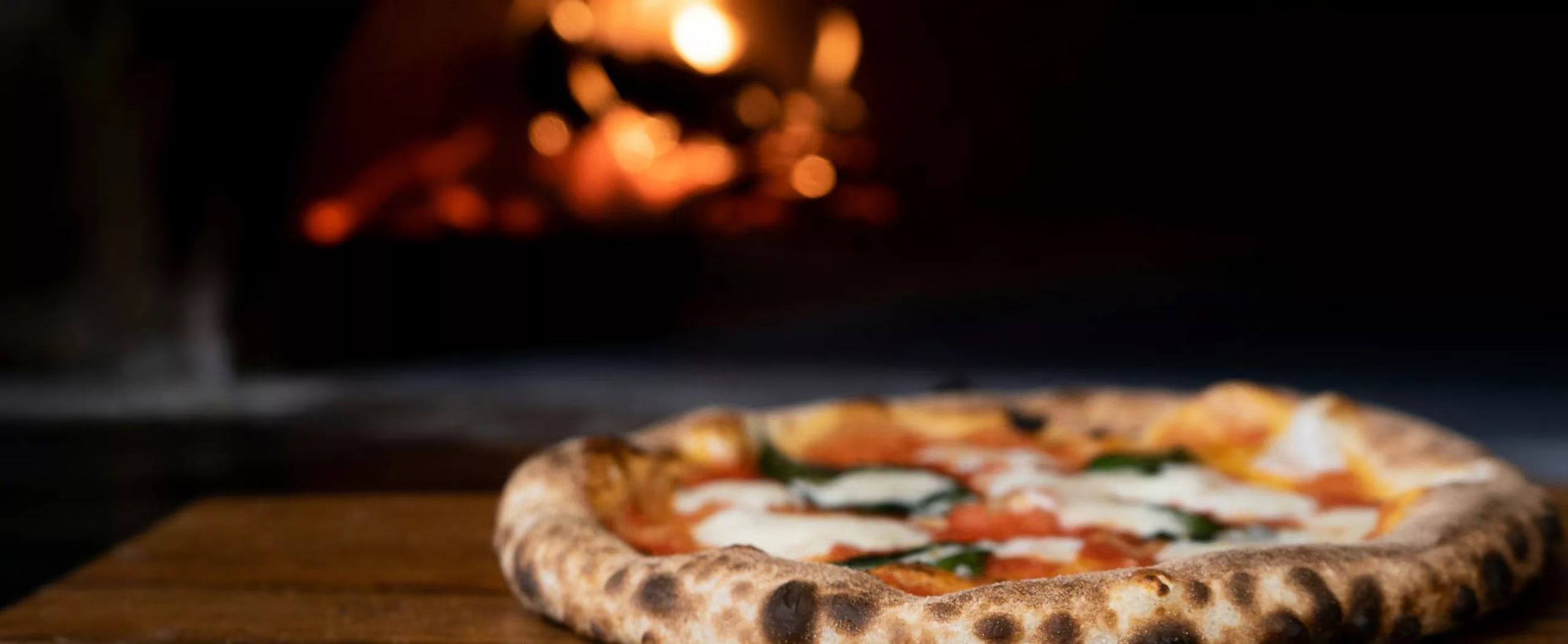
An outdoor pizza oven reaches temperatures of between 400 and 500 degrees, far above a conventional domestic oven. This power cooks the dough in just a few minutes, with a crisp base and an airy crust that can only be achieved with intense, fast heat. The refractory stone absorbs moisture and distributes heat evenly, something a standard electric or gas oven cannot replicate. The result: a pizza with texture, character and that slight hint of charring that makes all the difference.
Much more than pizza
Although its name may suggest otherwise, these ovens can handle many other preparations: artisan bread, roasted vegetables, whole fish and even desserts. Anything that calls for direct heat and fast cooking finds its place here. Its versatility makes it a genuine cooking tool, not a decorative feature. In autumn and winter, the oven also gives off a radiant warmth that makes the outdoors more comfortable and extends the time you can use the terrace even when it turns cool.
Integrated design
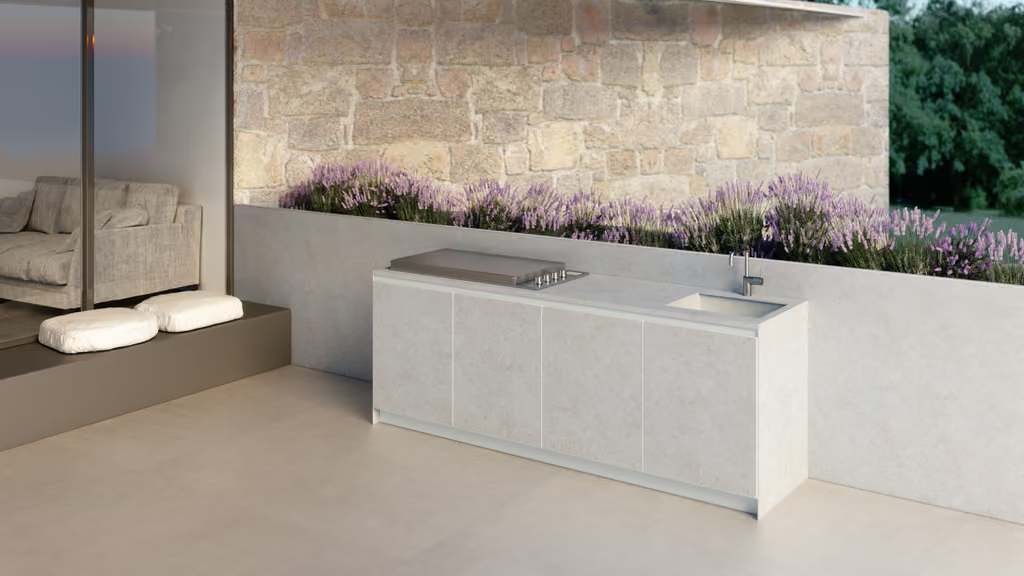
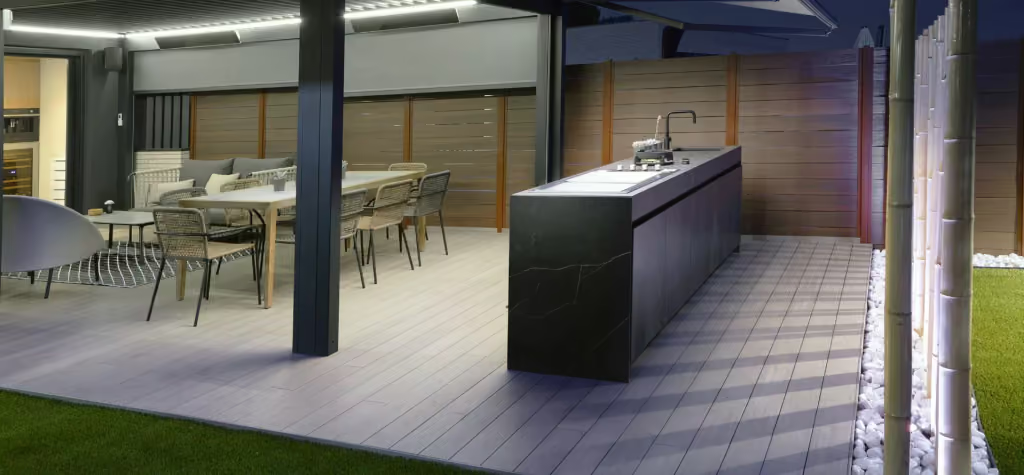
The ovens we build into our outdoor kitchens are made of stainless steel or high-resistance painted steel, materials able to withstand the elements and keep an impeccable look. They sit naturally in settings of clean lines and noble materials. They take up no more space than necessary, and installing them on dedicated modules keeps the whole arrangement tidy and visually coherent. The built-in thermometer, wide opening and raised chimney are details that make it easier to use and improve thermal efficiency.
Equipment for the whole year
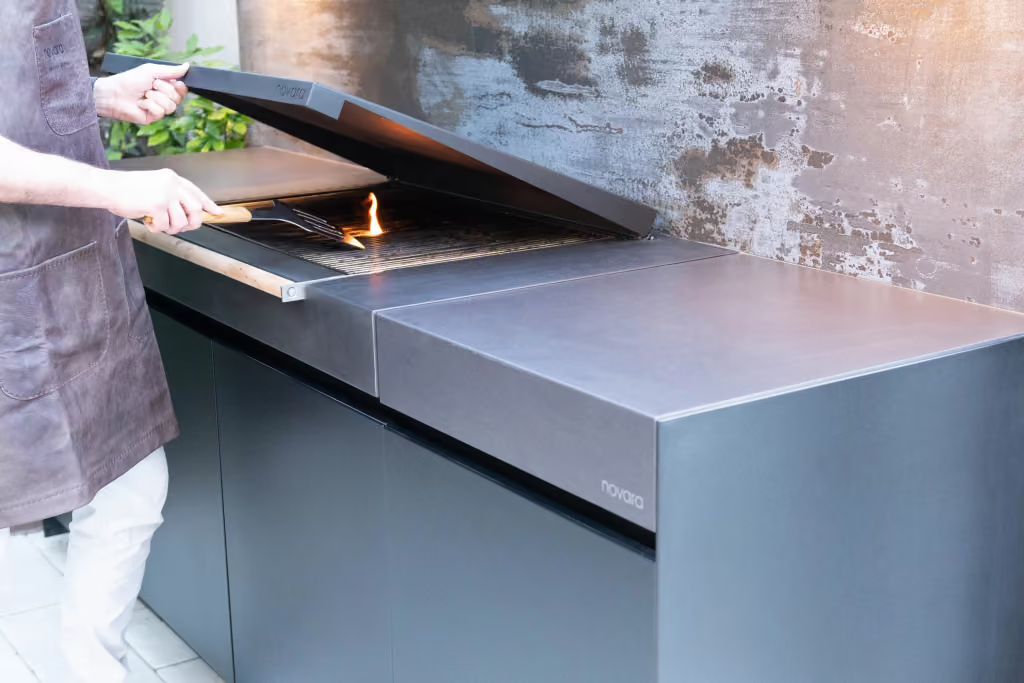
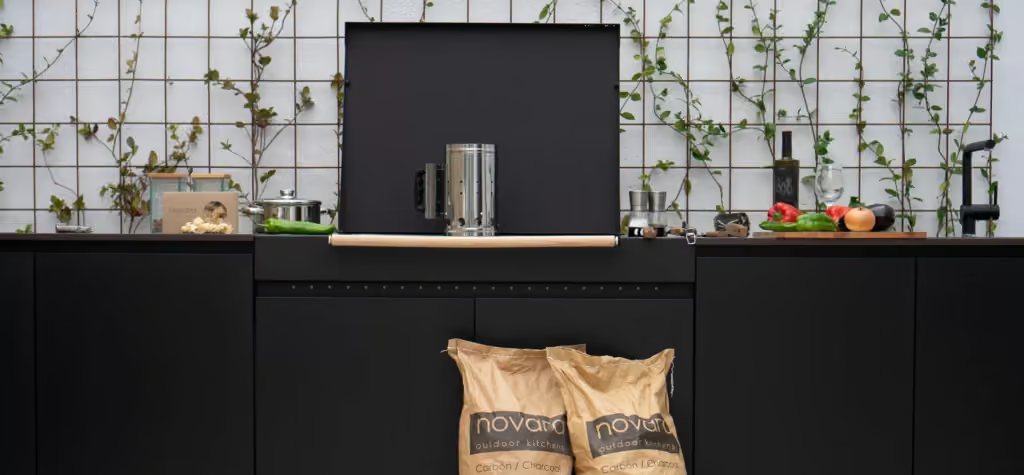
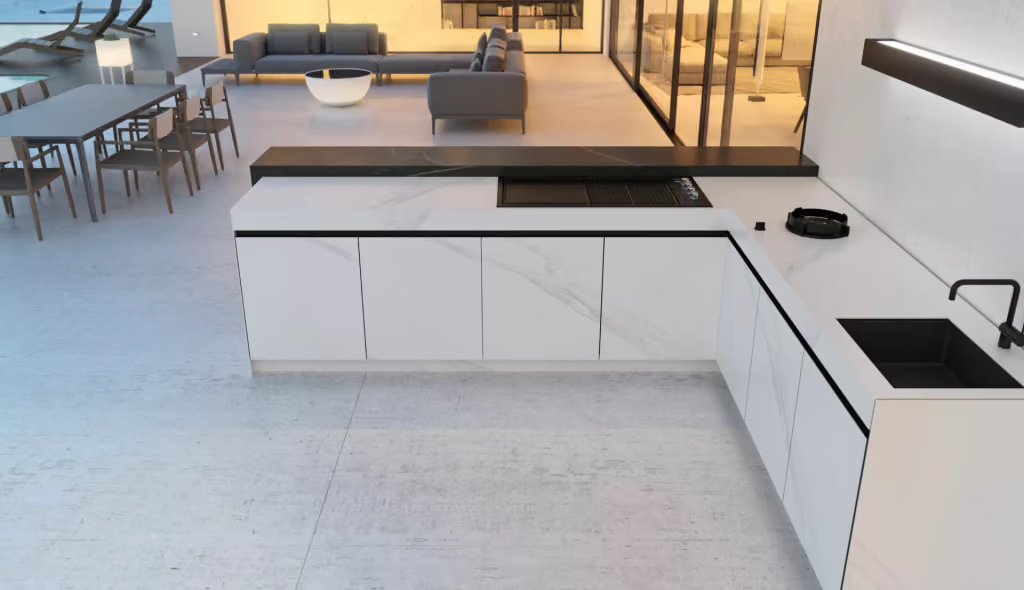
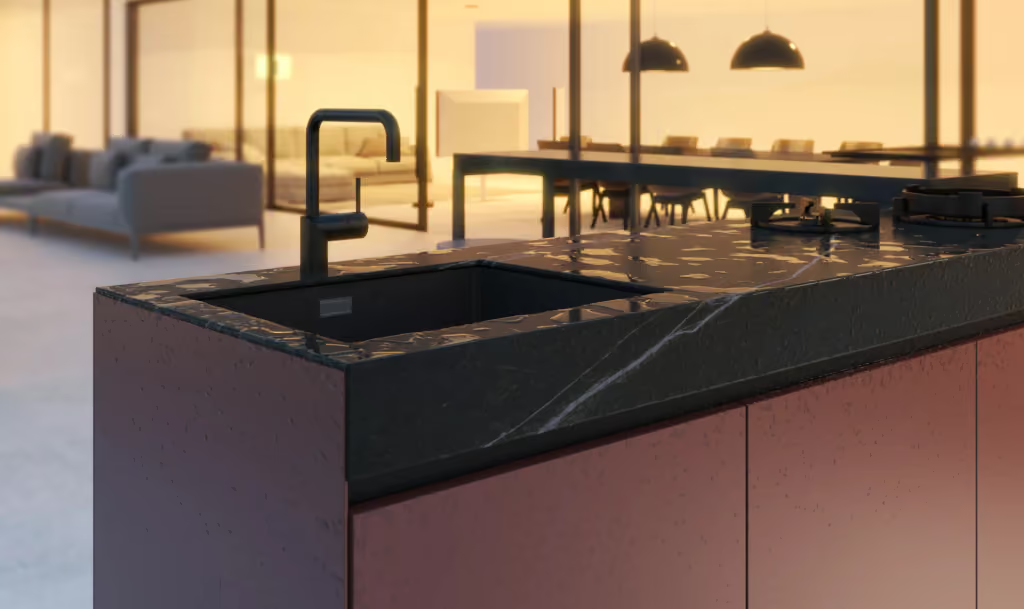
When designing an outdoor kitchen with the intention of using it in the colder months too, it is worth considering complementary appliances: grills with lids that retain heat, modules with doors that shelter from the wind, or worktops in moisture-resistant materials. Novara offers modular solutions for creating spaces designed for real use, not just for summer looks. A well-designed kitchen is one you enjoy in January as much as in July.