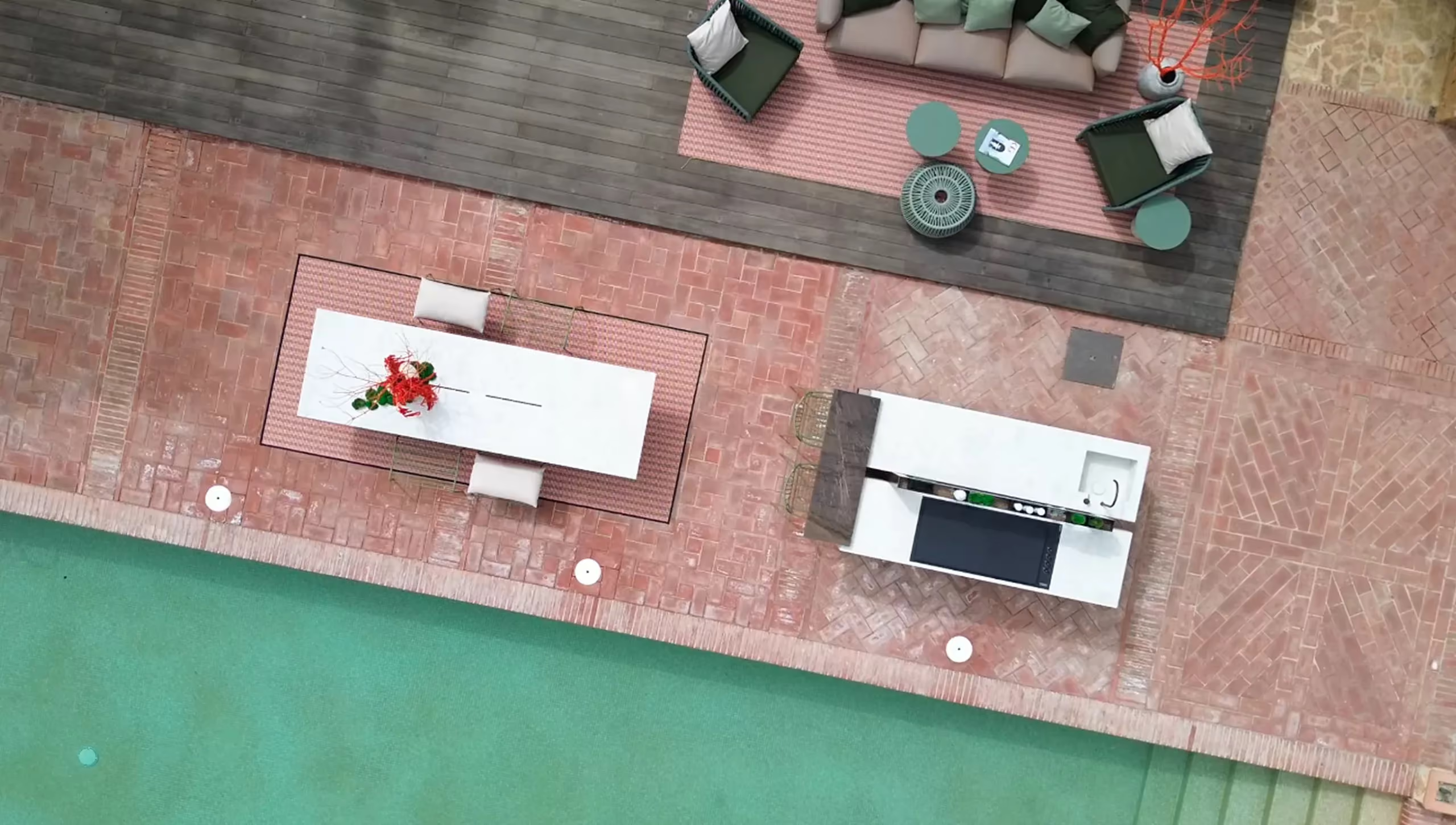
It’s that time of year when turning on the oven feels like torture and we avoid it at all costs. But the upside of the heat outweighs the downside: it’s part of our climate, it sets our rhythm, our character and our way of living. It pushes us to enjoy the outdoors and, in turn, to socialize.
And it’s precisely when the heat takes center stage that many homeowners discover a recurring, almost instinctive urge to cook outside.
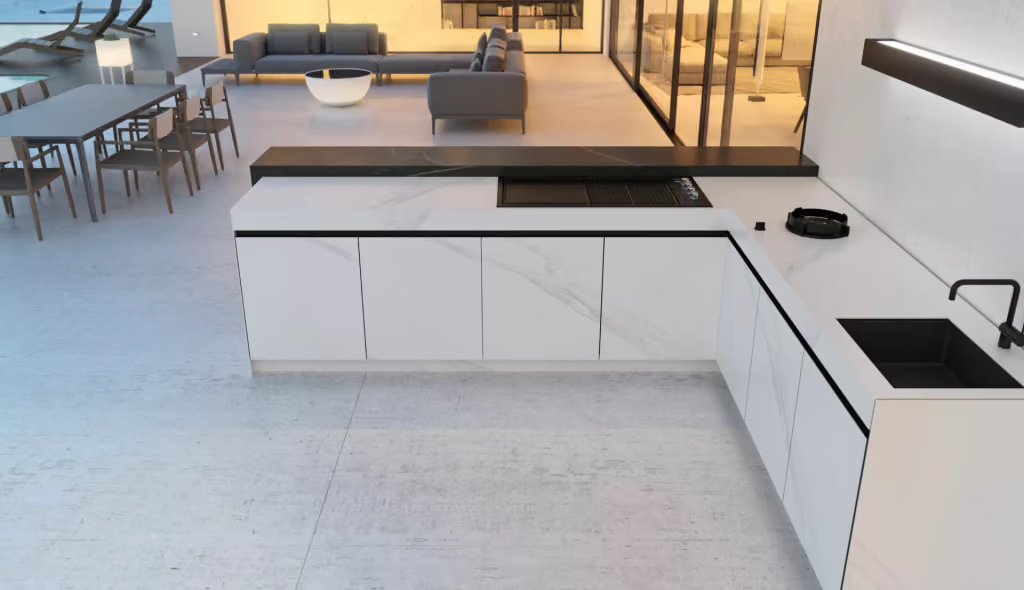
We’re not talking about throwing together a cookout on the patio. We’re talking about moving the kitchen outdoors with all its functional dignity. Doing it right. With confidence. With design. And without giving anything up.
Design for the heat, not against it
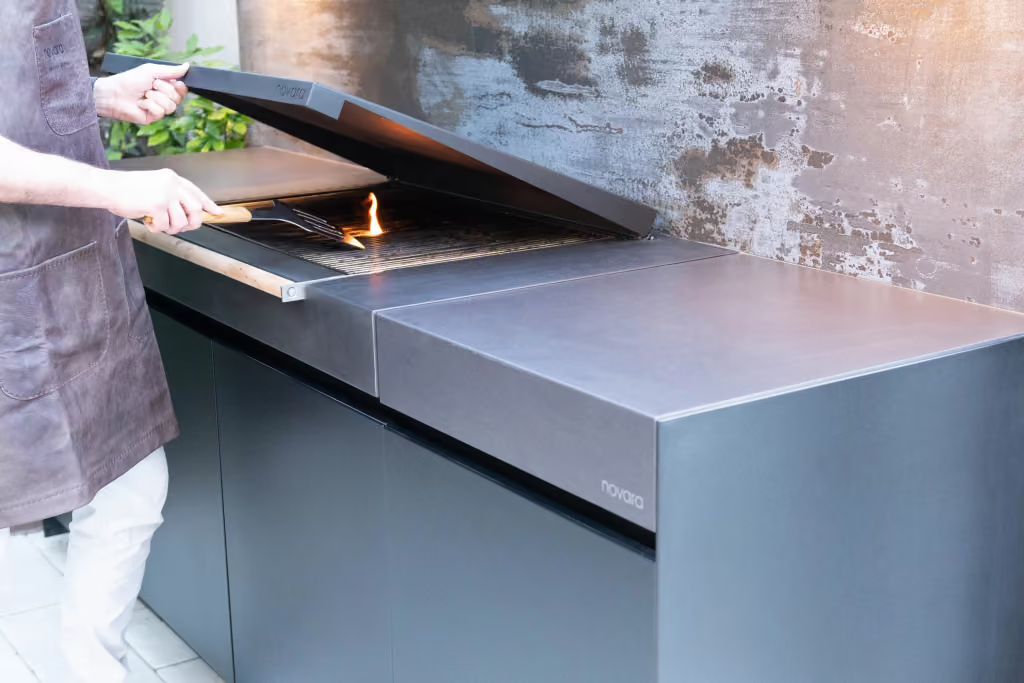
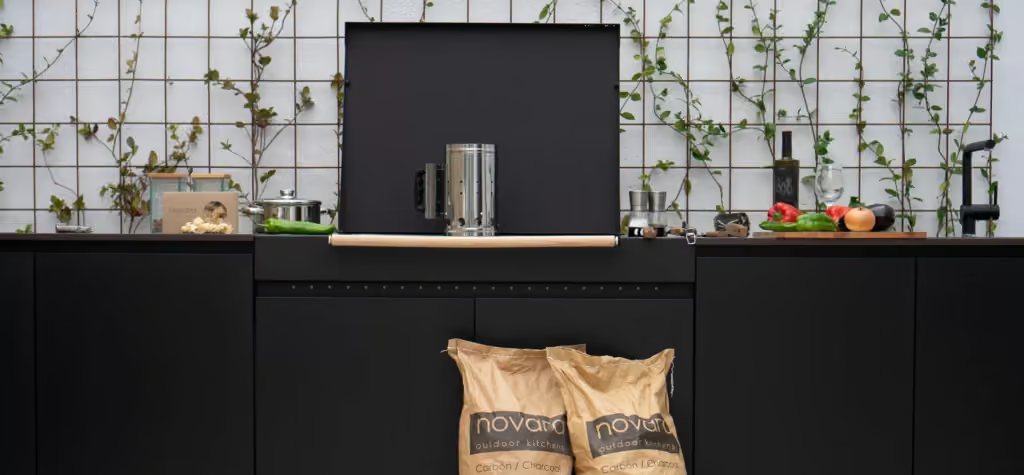
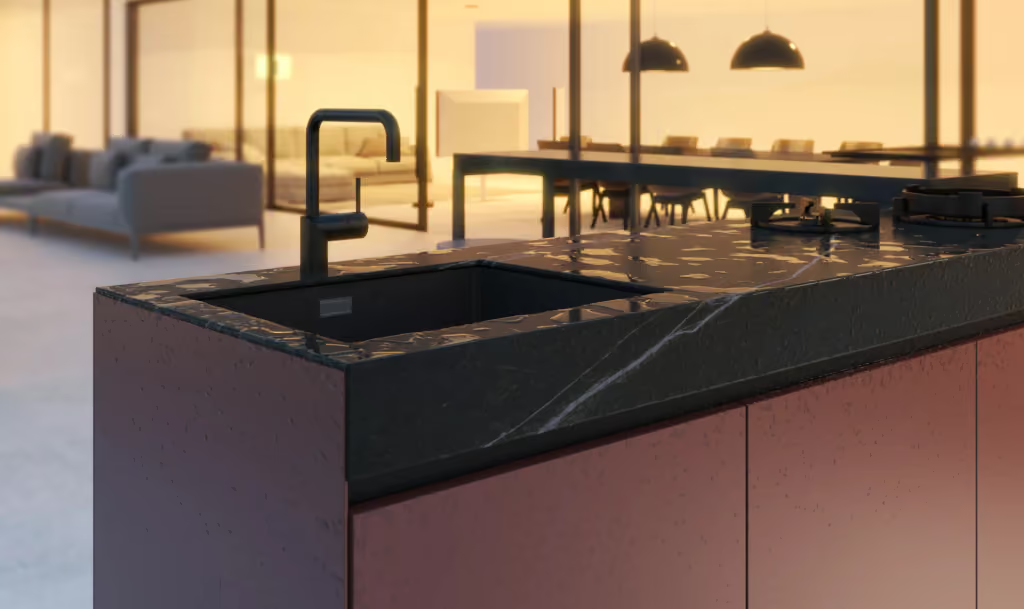
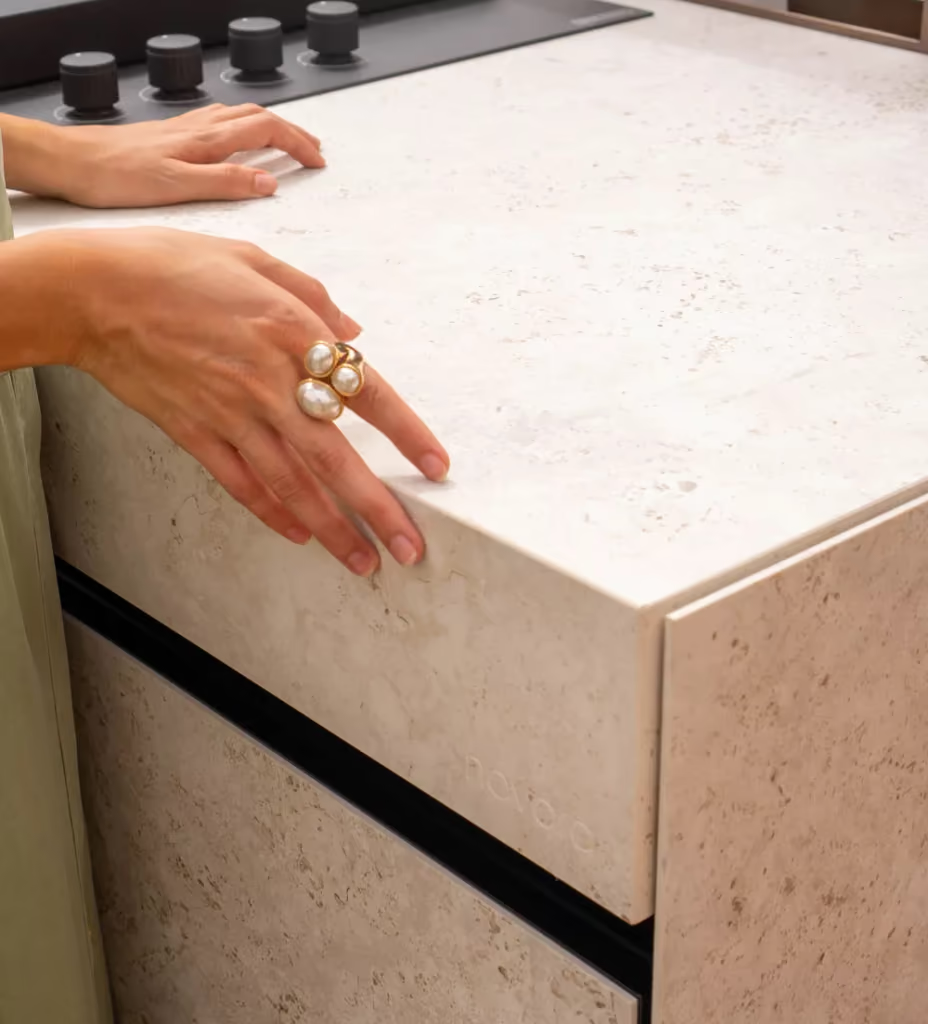
At Novara, we don’t see outdoor kitchens as simplified versions of indoor ones. Quite the opposite: we believe cooking outside demands a different kind of precision: materials that withstand the elements, finishes that don’t fade in the sun and structures that stay solid for years.
Durability isn’t an extra: it’s the foundation. Because when the temperature rises, everything else depends on it.
A well-placed kitchen is half the solution
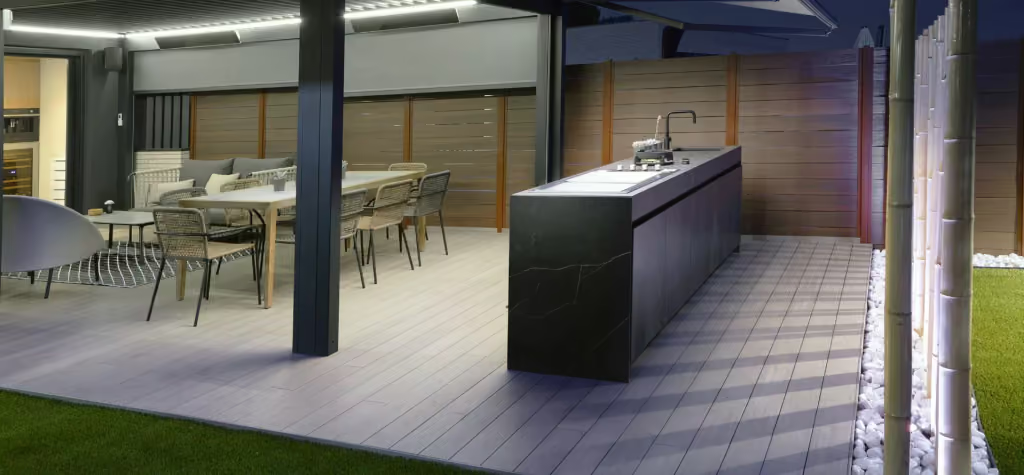
But materials aren’t the whole answer. Knowing where to place the kitchen matters, too. Orientation, for example, can make the difference between a space you can use all day and one limited to the early morning hours. Ideally, look for natural partial shade, avoid southwest exposure and study the sun’s path through each season.
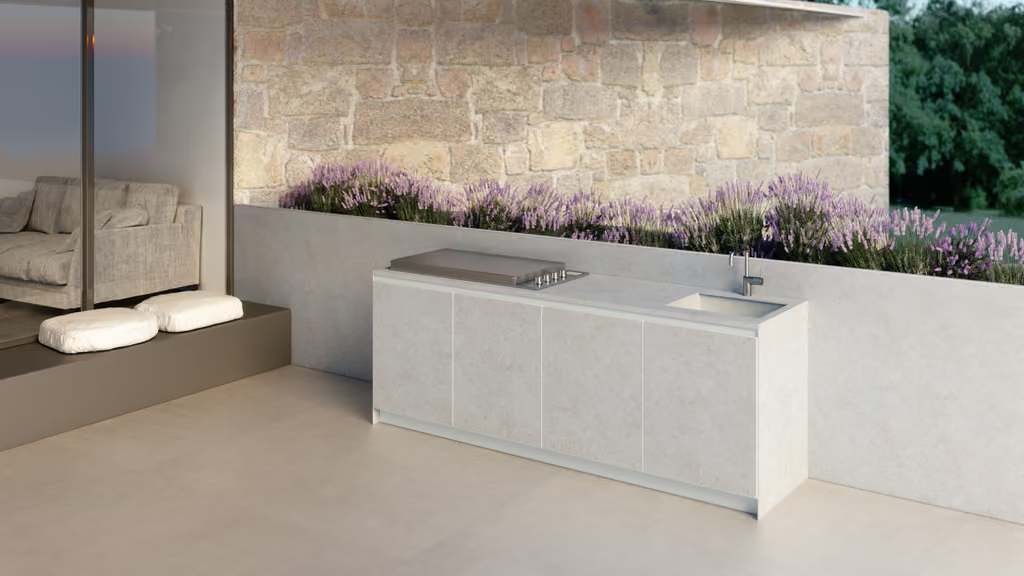
A light pergola, deciduous plantings or even a low wall that acts as a sun barrier can help protect the cooking zone without closing it off. What matters is that the space breathes without overheating.
It’s not about hiding from the heat, but knowing how to work with it.
Think of the outdoors as an indoor space
A well-planned outdoor kitchen isn’t an add-on: it’s an extension of your indoor space. That’s why it should offer the same conditions of use and the same guarantees. What changes isn’t the standard, but the setting.
And when summer is the setting, it pays to plan ahead.